
Our Technology
Introduction to CSTR Technology
Ever wondered what makes CSTR (Continuous-Flow Stirred Tank Reactor) technology a key player in biogas production? CSTRs ensure perfect homogenization of biomass with continuous mixing.
Ideal for dry matter contents below 10%, they operate at controlled temperatures, providing flexible and efficient biogas production. This makes them suitable for diverse biomass types, contributing significantly to renewable energy generation.
Dry Substance
5% < DS < 10%
Thermal Regime
Mesophilic or Thermophilic
Retention Time
20 < days < 45
Mixing System
Mechanical (slow & fast mixers)
The Process
How CSTR Transforms Biomass into Energy
Biomass Loading
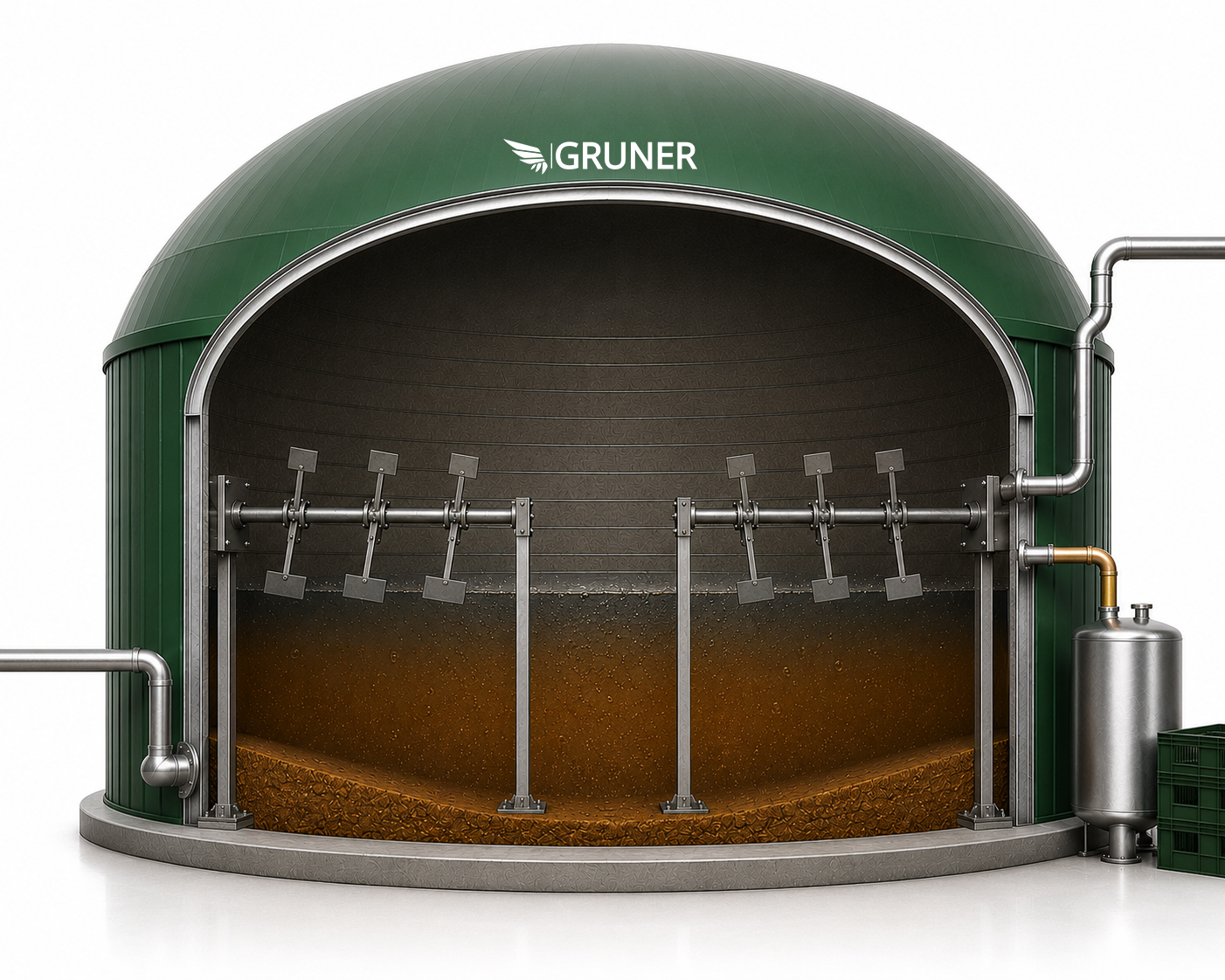
Solid and liquid biomasses are loaded through a pre-tank or loader into digesters made of concrete or steel.
Mixing & Digestion
Digesters equipped with slow and fast mixers ensure thorough homogenization, preventing crust and sediment formation.
Biogas Production
Under controlled temperatures, anaerobic digestion produces biogas with high methane content.
Gas Storage
Digesters are covered with a gasometer to efficiently store the biogas produced.
The Gruner Edge
Performance Milestones
Complex Biomass Handling
Suitable for feeding the plant with biomass with a complex digestion process.
Co-Digestion Capability
Provides the possibility to implement co-digestion with a varied recipe of biomass inputs.
pH Buffering Capacity
High buffering capacity for pH variation, ensuring stable and consistent operations.
Sustainability
CSTRs and Environmental Impact
How do CSTRs contribute to environmental sustainability? CSTRs enable the conversion of diverse biomasses into renewable energy, reducing reliance on fossil fuels and lowering greenhouse gas emissions.
Their efficient digestion process minimizes waste and emissions, contributing to a cleaner and greener environment. This technology is at the heart of our commitment to sustainable energy solutions.
40%+ CO₂ Reduction Lower emissions vs fossil fuels
100% Waste Diverted Zero waste to landfill
90%+ Energy Efficiency Conversion rate achieved
Yes Carbon Credits Eligible for certification